Tavo Europa has been involved in numerous long-term projects over the years, resulting in a wealth of diverse materials. If you’re interested in tools, research, various methodologies, and much more, our library section is the perfect resource for you.
Budget Time is an Erasmus+ project created by Tavo Europa with partners in Bulgaria and Romania to fight youth financial illiteracy by training youth workers to deliver fun, non-formal financial education for young people aged 18–25, including disadvantaged groups. The project produced interactive workshops, a practical financial education manual, and an innovative app to support young people in managing money, planning, saving, and staying financially safe.
The app brings together key features to make financial education practical and engaging: 1) interactive learning modules based on the project’s manual; 2) budgeting and goal-setting tools that help young people plan, track, and reflect on their spending and saving; 3) educational videos created by project partners to support healthy habits of financial management; 4) youth-focused tips and practical activities designed to support everyday financial decisions and responsible money habits.
The partners developed the Budget Time Manual as a hands-on guide for youth workers and young people, using non-formal education methods tested through youth worker experience and feedback from young participants. It includes interactive learning methods, ready-to-use worksheets and exercises, a beginner-friendly glossary, and structured chapters covering core topics like budgeting, saving, entrepreneurship, and consumer rights.
Project number: 2021-1-RO01-KA220-YOU-000028700
The C-ENTRY self-assessment tool can be used within organisations to evaluate the degree to which CE policies have been adopted. The tool assesses operations against 5 key indicators, namely: Resources, Waste, Energy, Emissions, and Innovation.

The Toolkit of 12 Interactive Infographics address thematic components identified by young people as key learning areas to support their sustainable entrepreneurship development based on circular economy principles.Embedded within a non-formal learning approach, the Interactive Infographics promote:
1) Circular Economy Knowledge – Opportunities in the Rural Economy;
2) Business Skills – Entrepreneurial Mindset;
3) Transversal Skills such as critical thinking, creativity, and media literacy.
Meanwhile, Virtual learning environment provides access to information, resources, best practices, initiatives, news, and events to give young people the opportunity to network and engage in peer learning.
The ultimate goal is to enable young people with creative ideas to establish circular economy initiatives in rural communities.


CEEYOUTH4EUROPE is a two-year Erasmus+ project that connects youth workers and disadvantaged young people across Europe to boost their understanding of EU youth policies, strengthen democratic participation, and support inclusion—especially for marginalised communities facing barriers and unemployment. Through webinars, capacity-building trainings, policy dialogue activities (including a Youth Ambassadors Network and a co-created Youth Declaration), and a final conference at the European Parliament, the project equips young people with knowledge, tools, and platforms to influence decision-making and build long-term partnerships, with resources made publicly available for wider impact.
Local Webinar with Žiedinė Ekonomika
International Webinar with InSoil
Project number: 2023-1-IT03-KA210-YOU-000152214
ConnectART is a youth project that promotes inclusion and diversity by educating young people to adopt an inclusive mindset towards people with disabilities and become active ambassadors of inclusion in their communities. Through digital art, creative methodologies, and targeted training for youth workers, the project uses accessible digital media to encourage active citizenship, strengthen inclusive environments, and build strong local and European networks.
The purpose of the toolkit is to introduce the topic of inclusion of people with disabilities and the main reference documents at the European level. Each chapter is an introduction, a summary of the key concepts, a translation of these concepts into practical guidelines for youth workers, and finally, some useful links for further exploration.

The aim of CyberEqual is to educate and raise the awareness of young people on Cyber Violence Against Women and Girls (CVAWG) and its associated implications. More specifically, interactive activities on CVAWG will be developed and will be complemented by a training guide to be used by youth workers, educators and other relevant professionals interested to deliver such training to young people, either through the school environment or through their organisational activities.
The last decade has been signified with the blooming of digital technologies for work, socialising and entertainment purposes.
Digital platforms that allow commenting, socialising and interacting with one another are abundantly available and range from social media and discussion forums to games and news portals. On the positive side, these digital platforms laid the ground for promoting equality among people as everyone is allowed to express their opinion and have their voice heard irrespective of their identity, economic or social status.
On the other hand, however, this open for comments and sharing of images space has provided new grounds for harmful and violent acts and has surfaced a new set of risks and threats for the people. victims. Examples of these acts include but are not limited to cyber harassment, ICT-related hate crime, cybercrime and online sexual exploitation; and are all included under the Umbrella term of “Cyber Violence”.
A specific part of those acts are Gender Based Violence, explicitly directed towards girls and women, with perpetrators that found new ways to harm women and girls with the violent acts committed now initiating offline and continuing online or vice versa.
Even though there are many initiatives educating or informing young people on GBV, gender equality or online risks, Cyber Violence Against Women and Girls (CVAWG) is not covered in any of them, as it is a new threat, which has yet to be addressed.
This deliverable, produced in the context of the EU co-funded project CyberEqual, provides a comprehensive state-of-the-art review on CVAWG emphasizing on the topics related to the prevalence, legislation and awareness aiming at mapping the current landscape, documenting gaps and identifying needs to facilitate a more effective response to CVAWG cases.
467 women & girls from Slovakia (110), Greece (104), Ukraine (97), Cyprus (84) and Lithuania (78), took part in the CVAWG survey about the awareness or interest in the topic of gender-based cyberviolence.
The CVAWG survey includes participants aged 15 to 35 years old with a balanced representation of the 18-25 (227 participants) and 26-35 (226 participants) years old groups. The presence of younger participants (15-17 years old) is limited, as signed parental consent was required, rendering their participation difficult.
The following deliverable is a summary of country-specific data on the prevalence, impact, and response to CVAWG reveals notable differences across countries.
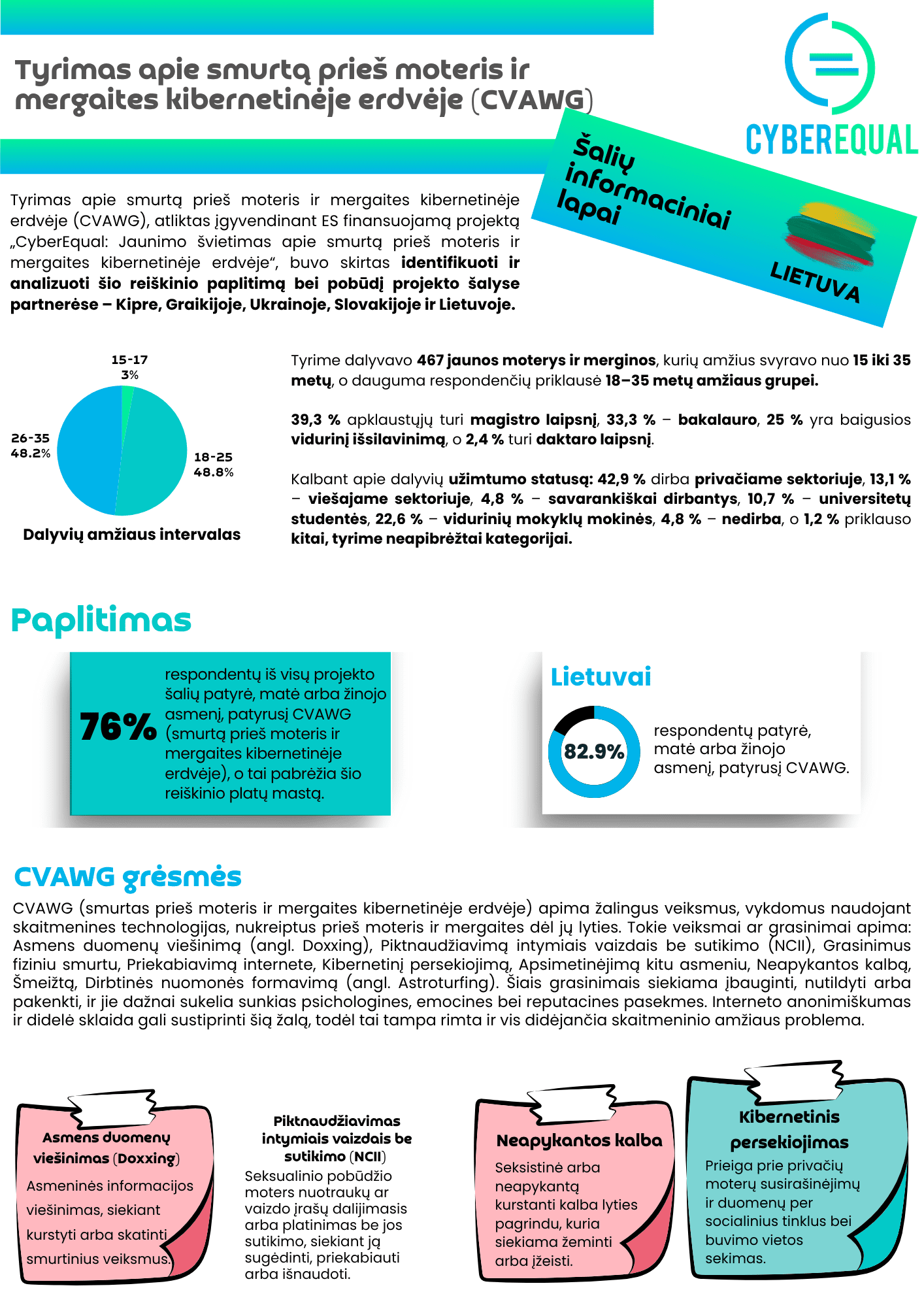
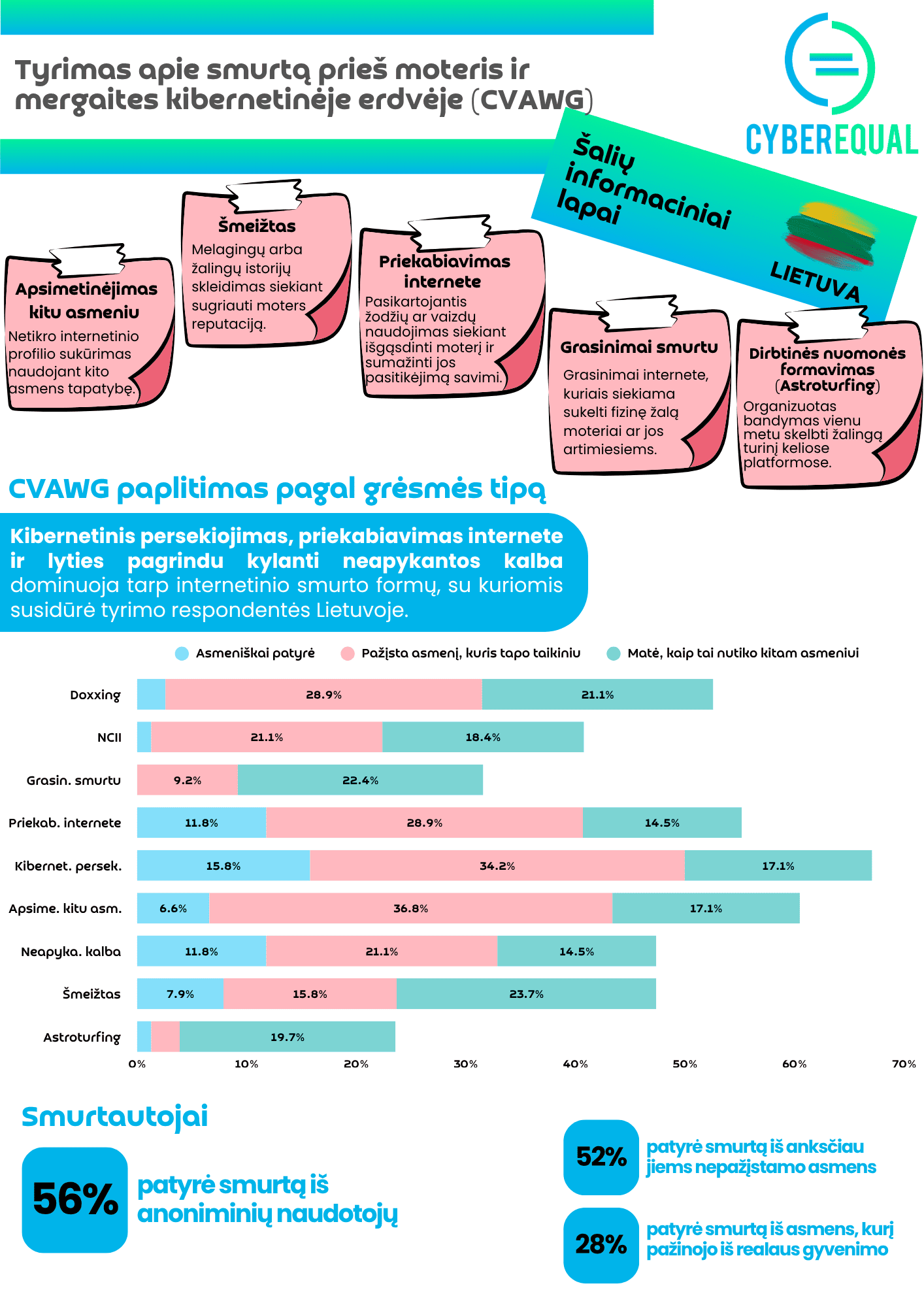
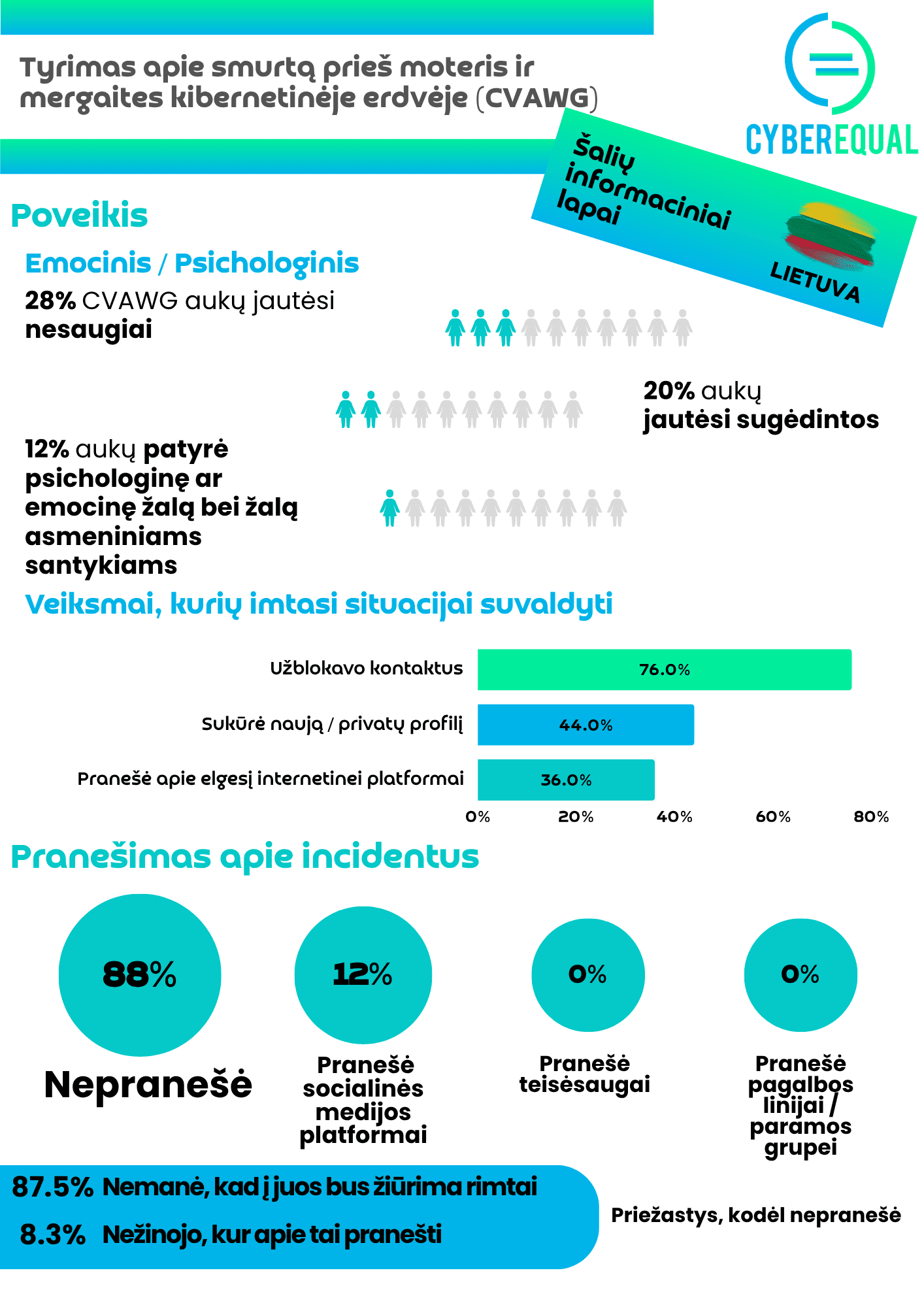
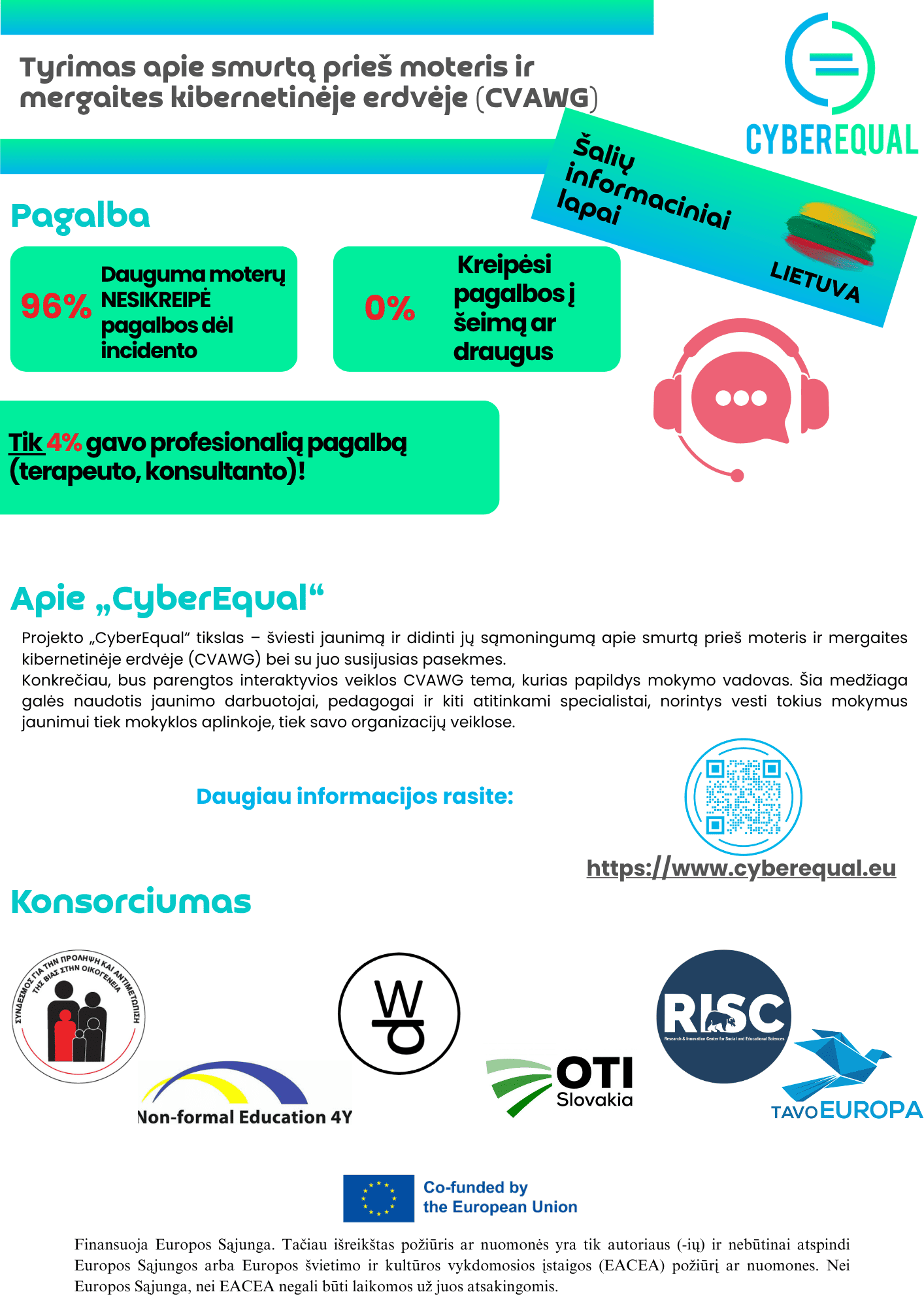
The purpose of this deliverable is to examine the prevalence, forms, and impacts of CVAWG across multiple European countries, drawing on both quantitative and qualitative data. By analysing key demographic factors, digital behaviors, emotional consequences, and institutional responses, this report seeks to identify existing legal gaps and inform evidence-based policy recommendations. Ultimately, the aim is to support the development of more effective legal, social, and technological frameworks to prevent and respond to CVAWG, while promoting the safety, dignity, and rights of women and girls in the digital environment
The Digital Cultural Designer (DCD) Project consists of extending and developing the digital skills and competences of young people especially in the field of culture aiming to improve cultural education through innovative online tools and methods. As young people are the main users of social media nowadays and as 21st century is the new digital era there is a need to increase the digital awareness of youth and develop their skills in IT and other technology contexts, increasing their knowledge and active participation in the activities of DCD Project and in their societies in general. The project aimed also to introduce young adults to the concept of open data allowing them to learn and experiment with open data, corresponding to their own needs.

Digital culture and digital cultural experiences are already a reality that is becoming familiar to many people around the world. However, there is a lack of knowledge and skills both in creating digital experiences and in integrating them into society and using them responsibly. The national focused digital cultural curriculum responds to the current need to understand the opportunities and challenges of LOD, digital culture and digital media. This curriculum is primarily intended for museums, archives, libraries, and other cultural institutions. Both for those who maintain a quality digital culture and those who are still learning to open their treasures to consumers.
The project centers on advancing the concept of Emancipatory Simulations for Inclusive Societies by equipping youth workers with the tools they need to transform conflicts in a way that promotes inclusion and social justice. It introduces two key educational tools: a simulation game designed to navigate cultural conflicts and a role-play focused on negotiating international humanitarian issues. These tools empower participants to develop and implement strategies that resolve conflicts while celebrating and incorporating diverse perspectives. The project also deepens understanding of social and cultural dynamics, inspiring youth workers to take a stand against injustice and apply this knowledge in their local communities. At its core, the project advocates for the adoption of emancipatory practices that challenge existing power structures, foster equality, and prevent the reinforcement of biases, ultimately contributing to more inclusive and equitable societies.
The digital toolkit was produced as part of the project, and has been shared on the SALTO platform and through partner websites, offering other youth workers across Europe access to ready-to-use resources.
The full set of training resources was compiled into this digital toolkit,ensuring that knowledge could be accessed, reused, and shared widely—without relying on printed distribution.Participants’ Experience in the project was also collected in the form of Testimonials that were included in the Toolkit.
Feelin’ @Live is a collaborative Key Action 2, Erasmus+ project aimed at improving the well-being and mental health of young people in Europe. In recent years, the mental health and well-being of young people have been severely impacted by global crises, including the COVID-19 pandemic and ongoing social and economic uncertainties. To address these challenges, Feelin’ @Live promotes youth participation, innovative practices, and active citizenship, empowering young people to design and implement community-based solutions. Running from January 2024 to December 2025, the project brings together youth organizations from France, Lithuania, Portugal, Denmark, and Croatia, with the shared goal of making mental health a priority. By raising awareness and fostering healthier, happier, and more engaged young generations, Feelin’ @Live seeks to build lasting, positive change across Europe.
Our activities includes:
This podcast series is part of the Feelin’ @Live Erasmus+ project, where young peopel and their allies explore the mental health landscape of today’s youth through a series of deep, reflective conversations.
Each podcast episode explores the challenges young people face in a demanding world and tackles diverse, yet interconnected themes affecting youth wellbeing — from the culture of productivity and societal expectations, to the complexities of loneliness, the struggle to access support, and the impact of identity on mental health.
With a focus on raw perspectives and lived experiences, young voices from Portugal, Lithuania, Denmark, France, and Croatia share through emotional honesty and practical insights. The podcast offers a space for young listeners and others to feel seen, heard, and empowered to care for themselves and others.
From 23 to 29 March 2025, 25 young people from Portugal, Lithuania, France, Croatia and Denmark, took part in a mobility event in Markutiskes, near Vilnius, in Lithuania.
The goal of the training was equipping youths with skills and competences to be aware and actively take care of their own mental health and wellbeing.
It also served as a way to listen to the real needs of youths in different countries, listening to their own perception of the gaps existing in the community to support their mental health and wellbeing.
A dedicated Skill Portfolio, covers and explains in a simple way 7 areas of Wellbeing: this was used during and after the project to guide reflection and self-Awareness of our Participants.
The second mobility took place in VIlnius from 1st to 7 June 2025.
This time, 10 youth workers (2 for country) were involved, with the goal of acquiring tools and competences to promote youths mental health.
To achieve this, we discovered differences and similarities in our local context and work place, sharing good practices and ideas. We also practiced active listening to young people’s needs, which bring us to exercise and reflect on how to create safe and inclusive spaces and activities for them
A second skills portfolio, specific for youth workers was created for this occasion. This guided us to learn more efficient ways to promote mental health among young people, and continue to spark individual reflection for self-improvement even after the end of mobility.
Project number: 2020-3-RO01-KA205-094853
The main aim was is to explore and assess young people’s knowledge of basic environmental issues, to investigate the strategies/policies at the national and EU level in relation to the promotion of environmental awareness and to develop a National Report presenting the results in each partner country. Then the partnership also developed a Comparative Infographic report and provided a Conceptual Framework for acquiring specific knowledge and targeted skills addressed to young people that will later be used as a basis for the design of the Education pack.
The platform incorporates different functionalities: 1) e-learning area with all learning educational material; 2) eco-cities audit tool for evaluating the sustainability and eco-friendliness of each city; 3) GreenACT movement where young people, youth workers, professionals to network, coordinate their actions and exchange good practices; 4) e-data bank including a collection of good practices: articles on European policies, similar green projects and other support material for youth workers. E-Learning platform: https://learning.greenactproject.eu/
The TOOLBOX includes the summarised results of the project. Moreover, it contains useful and practical information and ideas, useful for the on-field implementation of the GreenACT schools. It aims to offer concrete and practical help to NGOs, NPOs, schools, clubs or any other type of educational institutions and associations that would decide to implement such mobility. Overall, this document presents a step-by-step implementation guide for partners and other organisations to have, which will ensure high quality provision and monitoring of the learning provision.
HOPASUS project was born out of the need of teachers and youth workers from 4 European countries to develop their digital skills and become more resilient in times of pandemics by using sport video games in their virtual or face-to-face classrooms.


Every day, Youth people and Youth workers have to confront with new challenges, that are constantly changing and growing, requiring NGO to embrace innovation and digital technology. Recognizing the integral role that digital tools play in the lives of young people today, our project seeks to harness these technologies to foster deeper connections and engagement.
Despite the advancements in digital platforms, research indicates a notable gap in the confidence of youth workers, to employ these tools effectively. For this reason, the goal of our project was to bridge this gap, equipping youth workers with the skills and knowledge necessary to navigate the digital landscape confidently.
During NextGen 7 days of Training Course, 33 youth workers from 6 different Countries learned how to implement multiple innovative digital methods in their work with youth,equipping them with versatile skills and knowledge, enabling them to adapt to the evolving digital landscape and effectively engage with and empower young people.
The following manual collects all the digital tools that were presented during the NextGen project. The exploration of this useful collection allows to explore their potentiality on different context, like working directly with youths, writing projects, use Ai ethically, preparing presentation, making team work more efficiently and managing online work better.
This manual was created through collaboration and mutual effort to share used methods, country realities, advice and relevant information to help and spread the message about the project.
Project number: 101131295 — RYCA — ERASMUS-YOUTH-2023-YOUTH-TOG
RYCA fosters youth networking, participation, and climate action by strengthening young people’s ability to engage in social and political life locally and across Europe, while bringing Green Deal priorities closer to communities through practical initiatives and debate. It raises awareness and knowledge on climate change, promotes sustainable lifestyles and critical thinking, and empowers young people to become active role models and “Eco-mmunity Activators” who can influence their peers, work with local civil society and institutions, and strengthen youth connection to EU decision-making.

EcoGuide: An interactive online tool that enables users to independently map local obstacles and opportunities for adopting more environmentally friendly and sustainable lifestyles within their own territory.
https://rycaproject.eu/ecoguides/
Publish: Ryca Articles Produced byYouth
RYCA articles created by young people to share their perspectives, experiences, and ideas on climate action and environmental sustainability.
https://rycaproject.eu/ryca-news/
European Green Roundtable – Final Document: An advocacy and policy recommendations report summarising the key outcomes, proposals, and reflections from the European Green Roundtable, the closing event of the two-year RYCA project. It elevates young people’s voices and sets out youth-defined climate priorities and calls to action—organised into five core areas—to inform European, national, and local policymakers.
This project addresses the needs of the youth in the rural areas, as they constantly need to be more proactive in their communities, they need to be more skilled and gain new competences for better social development. Thus, the project’s objective was to help the young people in the rural area to achieve all these through activities that are meant to add value in their social and professional life. These activities are: creation of a guide on best practices for transnational cooperation for rural youth engagement; creation of an interactive methodology for organizing rural youth parliaments as tools for active engagement of young people, best practice exchange with our partners from abroad, rural youth parliament simulations; a learning, teaching training activity in order to gain new competences: digital, social, etc.
This comprehensive resource provides essential tools and insights to empower youth involvement, fostering a vibrant and inclusive community. Explore strategies to overcome challenges, create youth friendly spaces, and utilize online platforms for effective engagement.


The course is based on New Basic Skills modules for adult educators, trainers, youth workers and professionals who work with the target groups of NEETs and Early school leavers. The structure is designed on the basis of five key competences: a) Digital competence, b) Personal, social and learning to learn competence, c) Citizenship competence, d) Entrepreneurship competence, e) Cultural awareness and expression competence.

The materials consist of training methods, schedules, core modules and effective element combinations in a toolkit style. The Training Package for NEET Teachers is finalized in combination with the modules of the “Tools for trainers to empower NEETS” project: 1) Employability, 2) Mobility, 3) Entrepreneurship, 4) ICT & Media tools, 5) Soft skills & Other competences, 6) Additional Training materials which are related to the on-line modules and the results of the “Tools for trainers to empower NEETS” project which was completed in October 2018.
Project number: 2023-1-BG01-KA210-YOU-000155509
VIEW is a small-scale European project that empowers young women with fewer opportunities—including those from remote communities and affected by the war in Ukraine—by strengthening youth workers’ skills, creating practical educational tools (WikiVIRAGO), and supporting inclusive national campaigns on human rights, sustainability, equality, and resilience.
The “Women’s Empowerment for Social Change” training programme provided a comprehensive learning experience designed to equip participants with the knowledge and skills needed to drive positive social change in their communities. Through interactive sessions, workshops, and outdoor activities, participants explored topics such as civic awareness, digital skills, ecological skills, cultural diversity, and campaign planning. The programme empowered participants to become initiators of change by fostering collaboration and shared learning. Evaluation and reflection sessions ensured that participants could assess their progress and plan future actions, supporting the programme’s long-term impact.
The VIeW Project empowers young people—especially displaced women—through non-formal education and intercultural learning, with a strong focus on building intercultural competence among youth workers and volunteers. This research section draws the article “How Not to Be ‘Innocents Abroad’”, which shows how non-formal education strengthens intercultural skills, and highlights the Cultural Detective model as a close match to VIeW methods for developing cultural awareness, reflection, and leadership.

The YOUTHMINDS project aimed to develop a platform, a knowledge pack, an activity pack, and a guidebook that provided information about the mobile application. The InnerYOU MOB APP offered young people the opportunity to take care of, improve, and maintain their mental health by creating their own personalized Action Plan on a weekly basis, tailored to their preferences and needs. Additionally, the project pioneered the design of educational tools in a digital format, which helped young people and youth workers practice and enhance their digital skills.
The PLATFORM includes various functions for enhancing e-learning and e-communication of young people and youth workers. It includes the E-LEARNING section of the tool where young people will be able to navigate through the learning material and enhance their knowledge on mental health subject.
Platform: https://learning.youthminds.eu/
INspiring adUlts explore Their ARTIstic side (QuarantinART) equips and supports women with knowledge, key competencies and tools for improving understanding of artistic environments and diversity concepts in order for people who do not have the luxury to learn how to invest in art, or with a background that is not so artistic friendly, to invest time and energy in accepting that a more creative life will ensure an increase of resourcefulness and inspiration which even allows women to work professionally in a creative field.